A Documentary Look at the Game: “Beat The Lotto” and Its Place in Irish Cinema History
I. A Nation’s Dream, A Mathematician’s Obsession
There is a particular moment in Irish history, just before the Celtic Tiger began its improbable roar, when the nation’s collective imagination was captured by a simple idea: the possibility of a better life, won not through work or inheritance, but through the capricious hand of fate. In 1992, that idea was tested to its limits .
The National Lottery, established in 1986, had become a fixture of Irish life. It offered dreams of financial affluence few Irish had dared imagine before . For the mathematician Stefan Klincewicz, however, the lottery was not a matter of chance but of calculation. A Polish-born Cork resident, Klincewicz had already been part of a successful pub syndicate that scooped a £2.4 million jackpot in 1990. He had published books on lottery systems and ran a premium-rate advice line . He was not a dreamer; he was a punter who understood the odds.
What Klincewicz spotted was a flaw. On certain holiday weekends, the lottery offered a guaranteed £100 payout for matching four numbers. This, combined with a rollover jackpot, meant that covering every possible combination—almost two million of them—could be a near-certain bet . The plan was audacious, logistically absurd, and, in the eyes of many, entirely unsporting. But it was legal.
II. The Heist That Divided a Nation
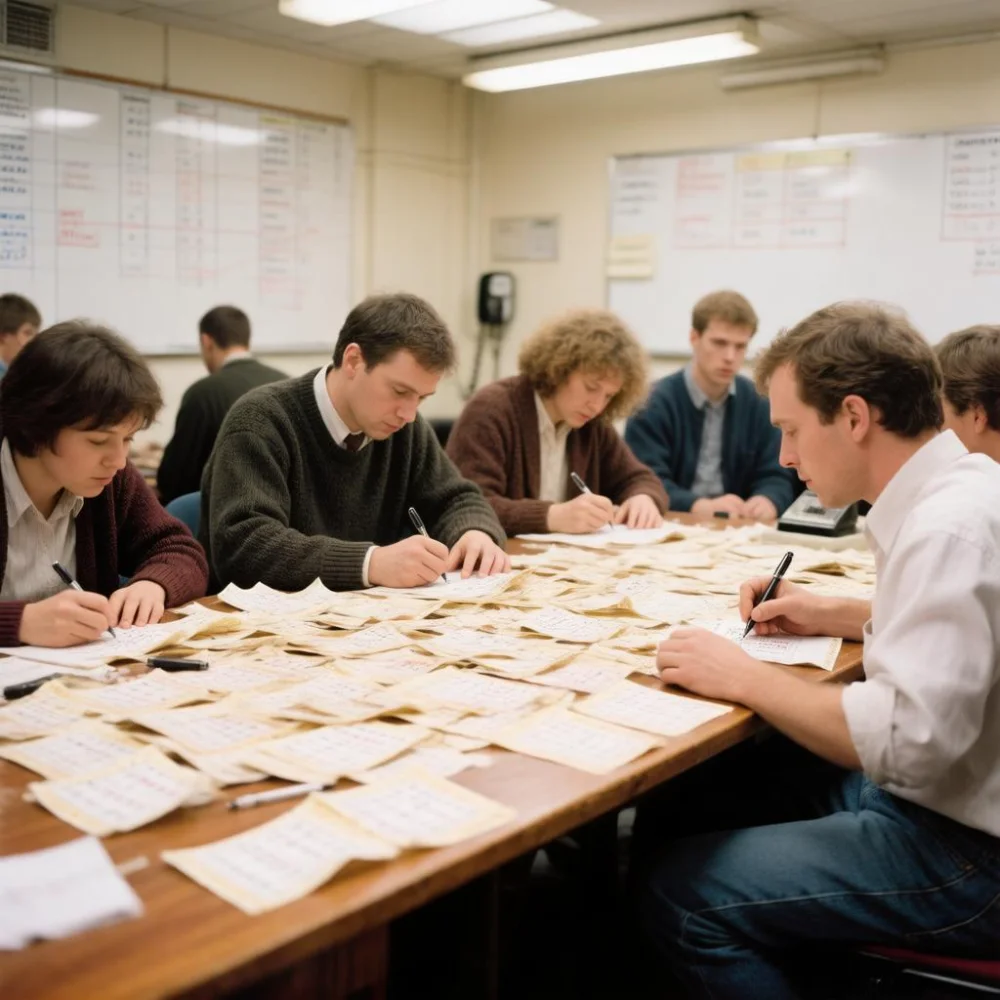
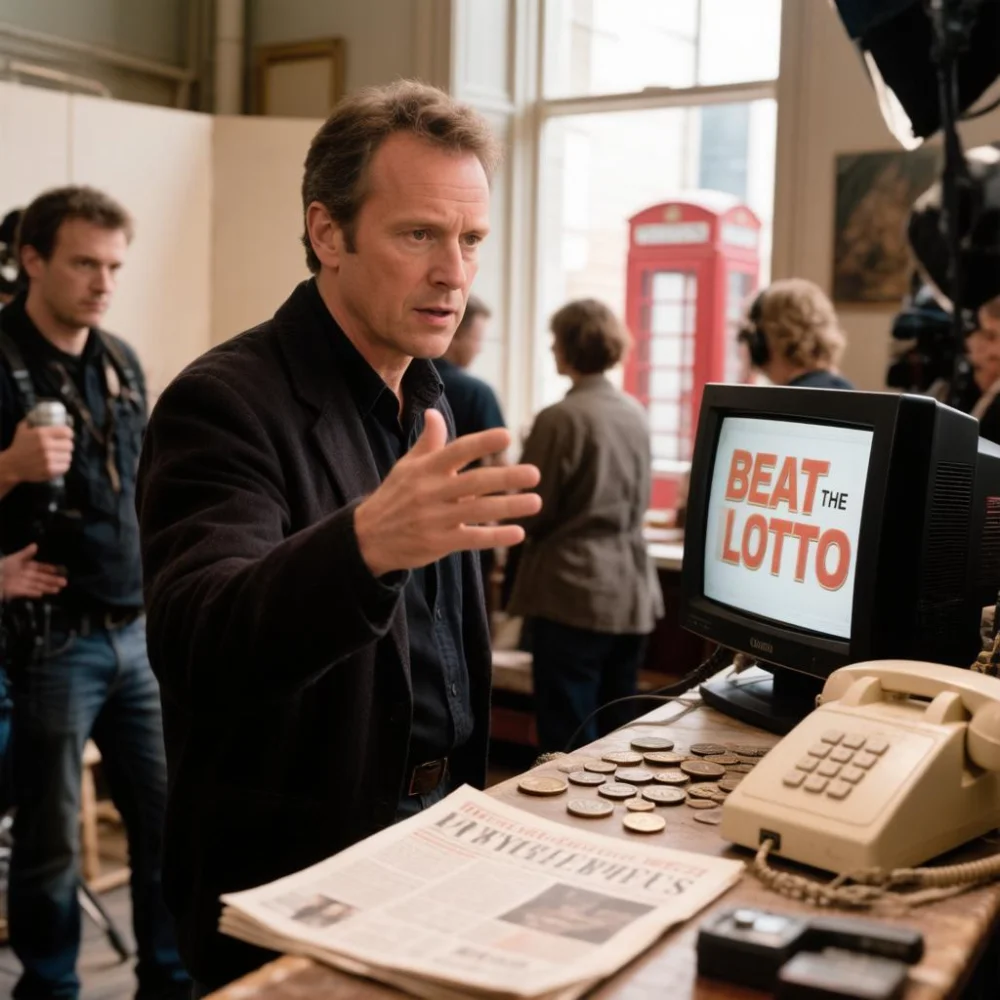
Ross Whitaker’s documentary Beat The Lotto , which premiered to acclaim at the Dublin International Film Festival in February 2025 , is a heist film unlike any other. It is a thriller told by the perpetrators, a caper that unfolds not with guns and getaway cars but with biros and betting slips.
The logistics were staggering. To cover nearly two million combinations, the syndicate had to fill out two million little boxes—almost twelve million ticks of a pen . Friends and family were recruited. A headquarters was established in Mespil Road, Dublin . The plan took months of preparation .
But the lottery authorities got wind of the scheme. In a move that would divide public opinion, they began shutting down terminals where syndicate members were buying tickets in bulk . A race against time ensued. The syndicate, led by Klincewicz and fellow investor Paddy Kehoe, who had fronted £130,000 of his own cash , scrambled to find machines still selling tickets. As Klincewicz later recalled, “We had a headquarters down in Mespil Road. It was pandemonium down there” .
The documentary captures this tension with Whitaker’s signature style—a keen examination of 1990s Ireland, the institution of the National Lottery, and what happened when that trusted system was thrown into turmoil . The result is a film that is simultaneously a thrilling caper and a time capsule of a nation on the cusp of profound change.
III. A Cultural Artifact of Pre-Celtic Tiger Ireland
What makes Beat The Lotto more than just a good story is its resonance with a particular moment in Irish cultural history. As Whitaker himself has noted, the film is “a reflection of Ireland in the 1990s, and how the events of the 1992 Lotto heist illuminate who we were then, before Ireland changed so much” .
The early 1990s were a time of disillusionment. Record unemployment. The resignation of Charles Haughey in scandal. The Annie Murphy–Bishop Casey crisis shaking the Catholic Church . For many, the state was not an institution to be trusted but a system to be beaten. As Whitaker observed, “The psyche back then was probably much more in favour of the idea of beating the system or taking down an institution because people didn’t really feel like the country was doing much for them” . The syndicate’s audacious plan tapped into that sentiment, dividing public support neatly in half .
Yet the film also captures the innocence of the era. Whitaker remembers, “I played on the street and we’d all run in at 8pm on a Saturday night to see if your family had won the lottery” . It was a time when the lottery was still a novelty, a shared ritual that brought families together around the television.
IV. A Documentarian’s Craft
Whitaker is no stranger to stories of audacity and obsession. His filmography includes Barney Curley: The Man Who Beat the Bookies (2021), Katie (2018) about boxer Katie Taylor, and Between Land and Sea (2016) about surfers on Ireland’s west coast . He has a gift for finding the human drama within seemingly niche subjects.
In Beat The Lotto, he deploys a winning aesthetic—”judiciously selected low-fi cuts from Irish TV in the late 1980s and early 1990s” . The archival footage is not merely illustrative but evocative, transporting the audience back to a time when the Euro and the Celtic Tiger were still distant possibilities.
The film’s success has been notable. It was awarded Best Irish Film by the Dublin Film Critics’ Circle . Following its cinematic release by Eclipse Pictures, it was acquired by Netflix for the UK and Ireland, ensuring its story reaches a new generation .
V. The Man Who Beat the System
At the heart of the documentary is Klincewicz himself, now in his 70s. Whitaker tracked him down through LinkedIn and, after a series of lunches, convinced him to participate . Klincewicz is a reluctant hero, an outsider who was often bullied as a child because of his unusual name. But his talent for mathematics was undeniable .
The aftermath of the 1992 heist remains contentious. The lottery initially refused to pay the syndicate, demanding the names and addresses of all members—a breach, it was argued, of the confidentiality promised to all winners . The syndicate eventually received their winnings, but they had changed the system. The lottery, embarrassed by the near-miss, altered its rules to prevent a repeat .
In a sense, the legacy of Klincewicz’s plan persists. He is still working on systems, still scheming. When asked about the possibility of a similar coup on the EuroMillions, he replied: “To fill out all those combinations, well over 100 million. Now, it could be done…” The gambler’s optimism, it seems, is undimmed.
VI. A Bridge to the Experimental
The themes of Beat The Lotto—obsession, risk, the desire to beat the system—resonate with broader currents in Irish art and moving image. The Irish Artists’ Film Index (MExIndex) documents works that explore Irish history, politics, culture, and society through experimental forms. While the Index does not currently feature a curated selection on gambling, the thematic parallels are clear.
Consider the work of artists like Gareth Byrne, whose project It Could Be You explores consumer culture and the obsession with wealth. The lottery, after all, is the ultimate consumer fantasy—the promise of something for nothing. Both Byrne and Whitaker are interrogating the same cultural impulse, albeit through different formal languages.
This convergence of documentary and experimental practice is characteristic of contemporary Irish art. As the documentary scholar Dióg O’Connell has observed, Irish documentary has played a crucial role in reflecting and shaping the nation’s dramatic social and political transformations since the 1990s . Beat The Lotto stands as a significant entry in this tradition, a work that is at once entertaining and deeply culturally resonant.

VII. A Lasting Record
Beat The Lotto is more than a film about a heist. It is a portrait of a nation at a crossroads, caught between the austerity of the 1980s and the excesses of the Celtic Tiger that would soon follow. It is a story about dreams, about the lengths to which people will go to escape the grinding realities of daily life, and about the institutions that shape and limit those dreams.
Ross Whitaker has crafted a work that is both a gripping thriller and a valuable cultural artifact. It deserves a place in the ongoing conversation about Irish identity, risk, and the enduring allure of the lucky break.