Macau on Screen: The Visual Image of the Casino City in World and Irish Cinema
The city of Macau, with its neon lights and enormous casinos, becomes a character in its own right in the film “Ballad of a Small Player.” Director Edward Berger turns it into a “noisy and extravagant” backdrop for a story of a man’s fall. This article looks at how the “sin city” image is created in cinema, and compares it to how Irish experimental films from the MExIndex archive create images of other spaces to convey emotional states.
The Visual Language of Macau in “Ballad of a Small Player”
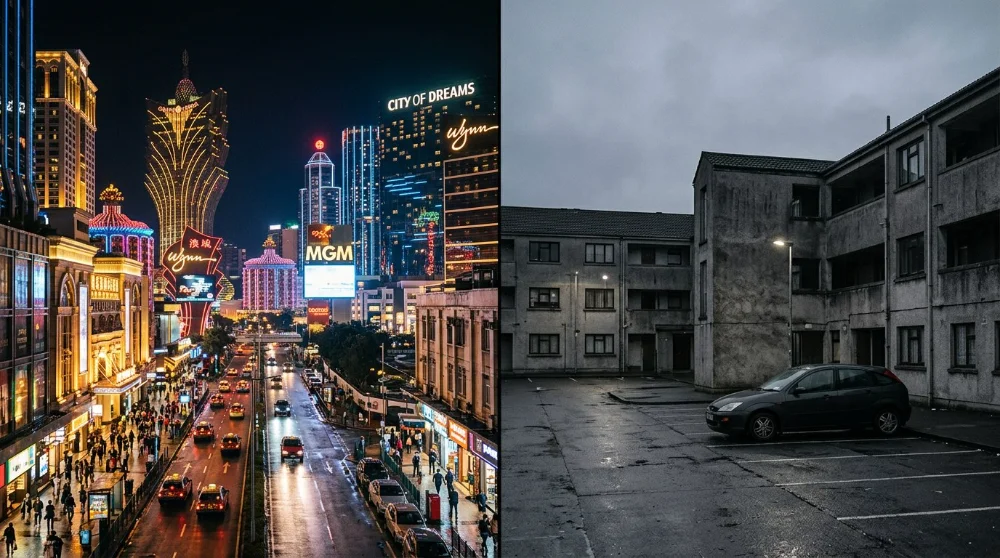
The cinematography of “Ballad of a Small Player” is central to making Macau a character. James Friend, the Director of Photography, developed a cyan-blue colour palette to match the film’s nocturnal, gambling-driven world . This choice gives the city a unique look, setting it apart from other “sin cities” on film. The film was shot in a 2.2:1 aspect ratio to highlight Macau’s vertical scale, emphasizing the towering, overwhelming nature of its casino-hotels .
Friend and Berger created two distinct visual worlds. One is the luxurious, high-roller casino with its “gaudy room” and “multicoloured carpets, chips, and slot machines” . The other is the simpler, more primitive life of the Chinese countryside and Lamma Bay . The contrast is deliberate. The casinos are full of “rich contrasts” and “neon reflections shimmer off rain-soaked streets” . The other locations offer a “sense of release, an escape from all the glitz and chaos” .
The film uses specific lenses to show the gambler’s psychological state. One scene uses a 17mm fisheye lens to create a sense of “intensity” and make the space feel “overbearing, more suffocating” . Macro and probe lenses were also used to “immerse viewers in the psychological state of a gambler” . The city, as depicted, is “both a playground and a prison” . The visual style has been compared to films like Martin Scorsese’s “Casino” and Terry Gilliam’s “Fear and Loathing in Las Vegas” .
Shooting in a Real Casino Environment
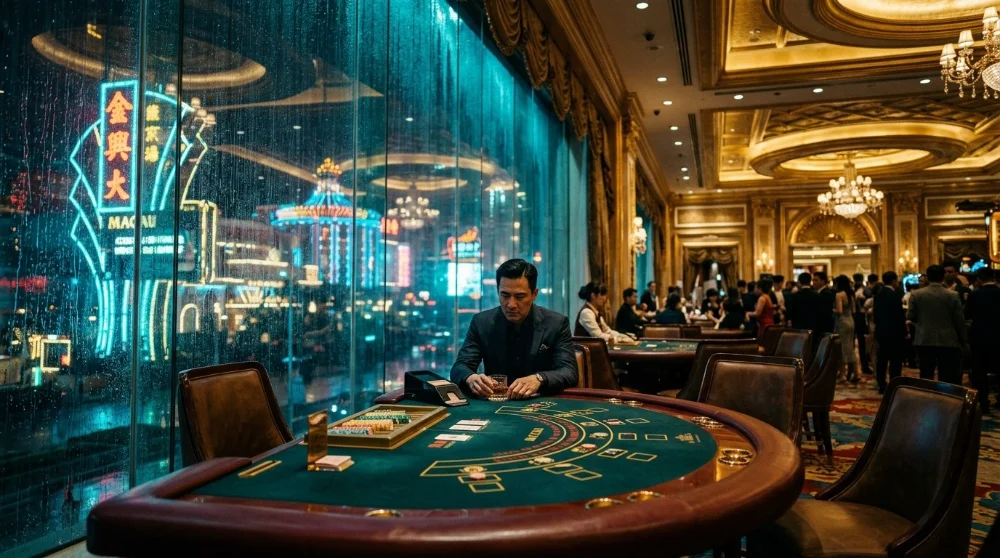
A key challenge was filming in the actual casinos of Macau. Access was extremely limited . The crew could only film in lobbies at odd hours, like 3 am, when they would cause the least disruption . They had to negotiate for access to high-roller areas and often had to be flexible with their schedule . To get around strict rules, they used portable LED lighting like the INFINIMAT 20×20, which could be set up and moved quickly .
The effort was worth it. The locations are a major part of the film’s appeal. One review notes that the city is “beautifully depicted, not just as a backdrop but as part of the story itself” . The visual style is “glorious, rich and exciting,” making it one of the most visually striking films of the year . The art direction and cinematography create a world of “excessive luxury” that is “immersively created” .
Irish Experimental Cinema: Space as Emotion
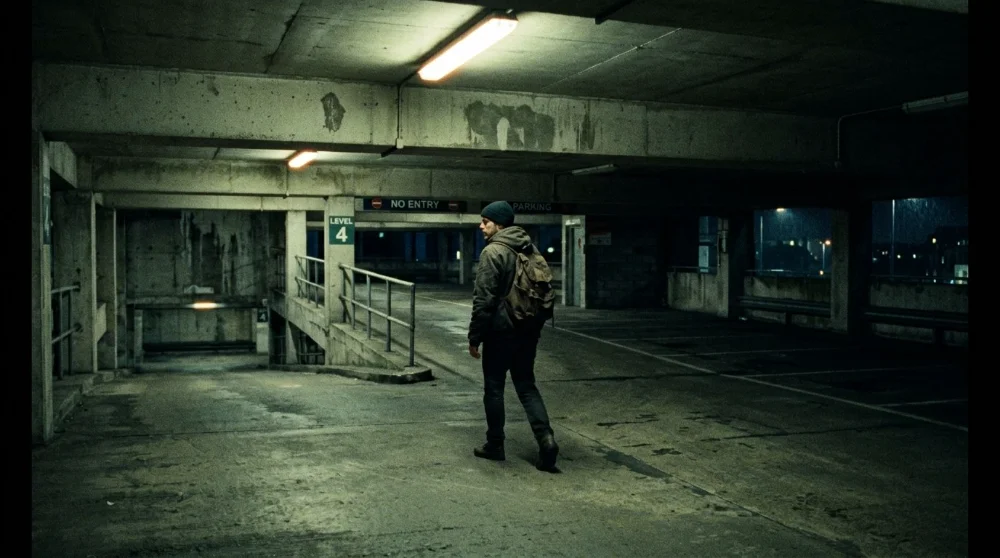
Irish experimental filmmakers in the MExIndex archive use space in a similar way, not just as a setting but as a reflection of a character’s or society’s state. This is a tradition with deep roots. Paddy Jolley’s video work “Stairwell” (1999) showed a looped video of a figure falling down stairs in a Dublin car park, creating a feeling of “violence” and urban threat . His work consistently depicted “anonymous, marginalised individuals” in “dehumanised concrete jungles” .
Martin Healy’s films, like “Fugue” and “Last Man”, explore “failed utopian projects” and the demise of the modernist dream . His work uses locations like a derelict airport terminal or a garden city to create an “elegiac, even mournful” mood, exploring the “failure of urban living” .
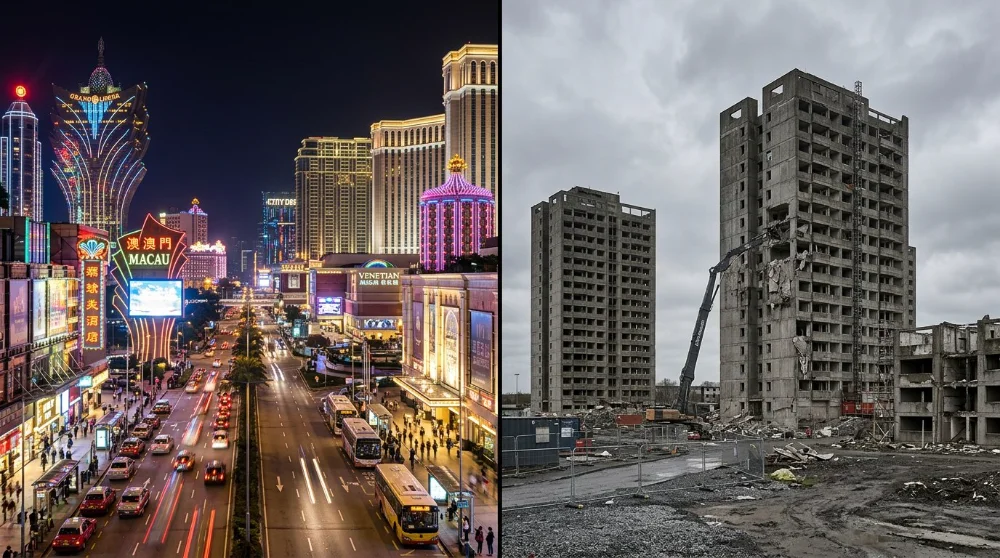
Other works from the archive explore how landscapes hold memory. Ruth McHugh’s film “Spectres of Modernity” observes the demolition of the Ballymun high-rise housing in Dublin, using the ruins to reflect on loss and the failure of modernist ideals . Ellen O’Connor’s film “Lethe” (2020), included in a curated selection for MExIndex, examines “sea, ice and rivers as channels of memory and feeling” . The film follows an “unidentified dweller of a watery space” who is transported “to an instability of thought and vision” .
Two Visions, One Cinematic Language
Both “Ballad of a Small Player” and these Irish experimental films use visual language to make space meaningful. In Berger’s film, the neon-lit, vertical, and oppressively luxurious Macau directly mirrors the protagonist’s addiction, desperation, and internal decay . The experimental films create a mood through the depiction of spaces, but often without a clear narrative. They invite the viewer to interpret the emotional weight of the location for themselves, using space to explore themes of memory, loss, and societal failure .
What unites them is a fundamental belief in the power of setting. It is not a neutral background. It is a dynamic force that shapes meaning, emotion, and character. Whether it is the overwhelming lights of a Macau casino or the quiet ruins of a Dublin housing estate, the image of space becomes a window into a deeper psychological and cultural truth.