The Blask Index and the Arts: How Gambling Regulation Shapes the Cultural Landscape
When you walk into a casino, you enter a world of light and shadow. The flashing neon, the mirrored walls, the endless rows of slot machines — it is a space designed to make you lose track of time. But what happens when the lights go out? What happens when taxes rise and the money stops flowing?
The answer matters not just for gamblers and operators. It matters for artists, musicians, filmmakers, and anyone who depends on cultural funding. Because the money that flows through the gambling industry often finds its way into the arts. And when regulation changes, the cultural landscape changes with it.
Mexico: A Cautionary Tale
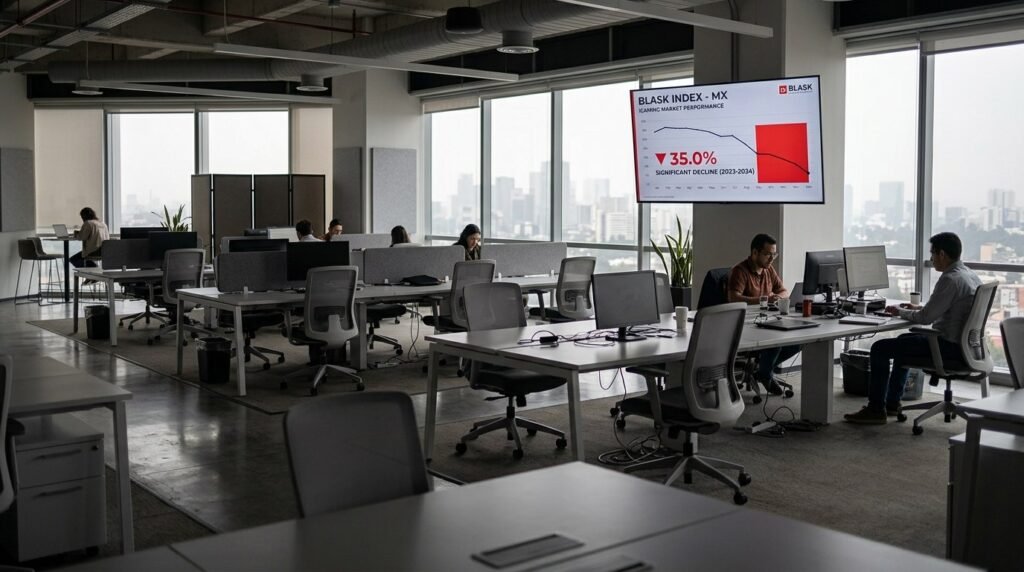
Look at Mexico. From January 2022 to December 2025, the country’s iGaming market grew sixfold. It was a remarkable run. But in early 2026, the trend broke . The Mexican government raised the IEPS — a special tax on betting and online casinos — from 30% to 50% .
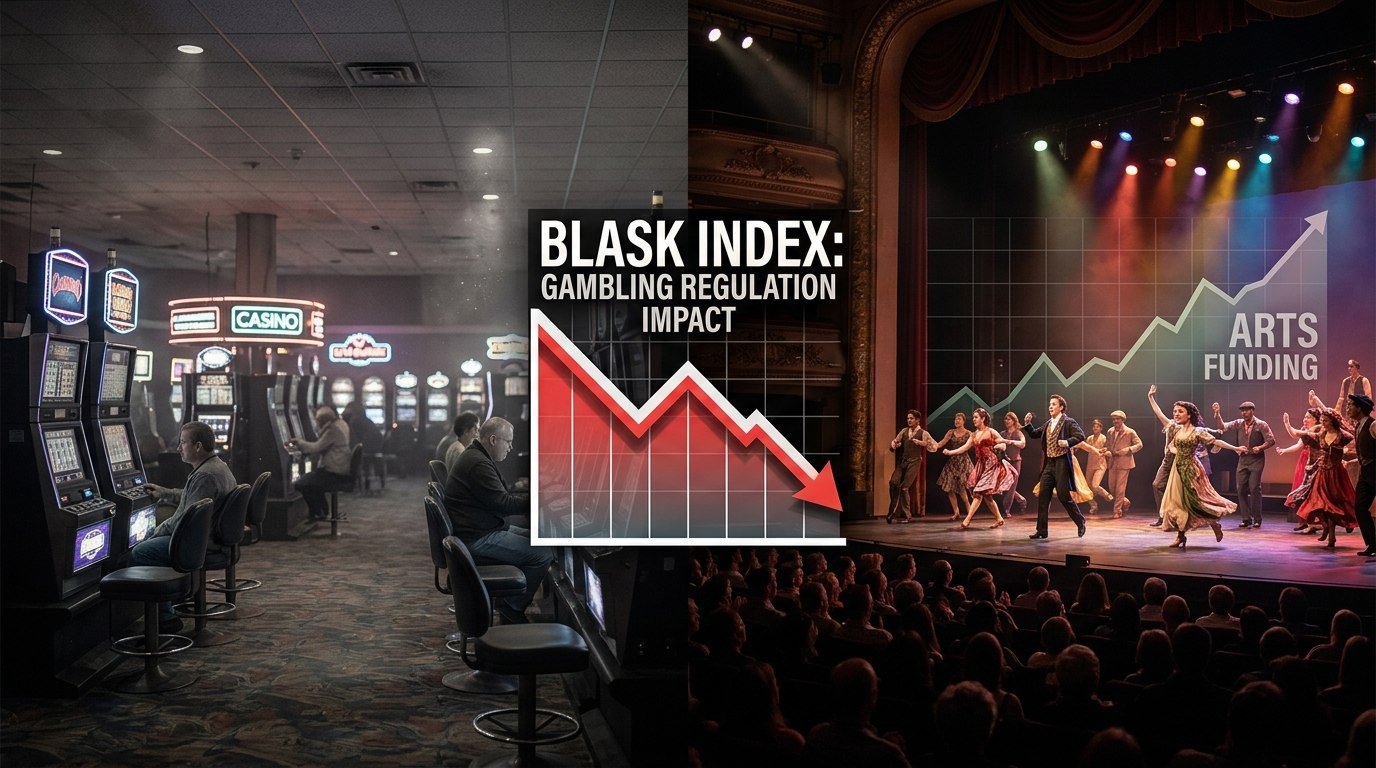
The result was swift and brutal. The Blask Index, a real-time measure of iGaming market demand, fell 35% from its December 2025 peak . The hardest hit were local licensed brands. They lost 34% of their market value . International brands, with more diversified operations, lost less than 7% .
Consider Caliente, Mexico’s market leader. In December 2025, it held a 40.2% share of the Blask Index. By March 2026, that share had dropped to 21.8% . The reason is simple: when tax rates rise, operators have less money to spend on acquisition, bonuses, and promotions . And when they pull back on spending, the brands built on that spending suffer most .
Dmitriy Belianin, co-founder of Blask, described the reform as “economically prohibitive for most verticals” . This is not just a story about business. It is a story about what happens when a government decides to tax an industry heavily. The money that could have gone into marketing, sponsorships, and cultural partnerships disappears. The lights in the casino dim. And the artists who relied on that sponsorship feel the pinch.
Estonia: A Different Model
Now consider Estonia. In 2025, the Estonian government made a different choice. It approved a plan to gradually lower the online gambling tax from 6% to 4% .
The goal was to attract international operators and, crucially, to generate more stable funding for sports and cultural initiatives . All the money from the tax, the government said, would go directly to culture and sports . The Minister of Foreign Affairs, Margus Tsahkna, argued that if the forecasts hold, revenue could grow from €22 million today to €30 million by 2028 .
The tax cut would be introduced in gradual steps of 0.5%, and safeguards are in place to suspend further reductions if the anticipated increase in revenue fails to materialise . Prime Minister Kristen Michal defended the move, comparing it to the earlier abolition of Estonia’s corporate income tax — a policy that was initially met with doubt but ultimately fuelled substantial economic growth .
The critics, however, were vocal. Former finance minister Mart Võrklaev warned that the tax cut could cost the state budget €6 million in 2026, €8 million in 2027, and €10 million in 2028 . He questioned whether additional operators would actually enter the market, pointing out that nine new companies joined following a 2023 tax hike but generated only €4 million in extra revenue .
The debate is ongoing. But the underlying principle is clear: Estonia is betting that a lighter tax burden will bring more operators into the formal market, increase overall revenue, and provide a sustainable source of funding for the arts. The question is whether the bet will pay off.
Brazil: The Dilemma of Sponsorship
In Brazil, the relationship between gambling and culture has taken a different turn. Bets have advanced rapidly into the cultural sector, financing everything from festivals to music tours . Superbet, one of the first operators to be regulated in Brazil, has already spent nearly R$150 million on cultural sponsorship, supporting events like Rock in Rio, Rio Carnival, and Lollapalooza .
The sheer scale of this money has created a dilemma for artists. Do they accept sponsorship from betting companies and risk associating their image with a controversial industry? Or do they refuse the money and risk losing space in an increasingly competitive market ?
The debate has become public. In 2026, during the FIFA World Cup, the campaign “Block no Tigrinho” (Block the Tiger) gained traction on social media, with artists like Caetano Veloso, Emicida, and Camila Pitanga warning about the risks of betting . At the Village festival in Rio de Janeiro, supported by Superbet, the sponsor’s logo was covered by the production team before Marisa Monte took the stage . Anitta, who also performed at the event, publicly stated that she refused to associate her name with the sector .
Meanwhile, the operators themselves are watching closely. The CEO of Superbet, Alexandre Fonseca, said that if advertising restrictions continue, “these investments lose meaning for the company,” and it will stop investing in major events in Rio and São Paulo .
Paula Lavigne, founder of the 342 Artes movement, captured the complexity of the situation: “There is an important difference between those who have the conditions to refuse this type of association and those who often do not have that possibility” . She added that the movement is not about pointing fingers at artists who depend on these spaces, but about demanding public debate and regulation .
The Irish Context
What does this mean for Ireland? Ireland has its own history with gambling and the arts. The National Lottery, established in 1986, has been a significant source of funding for sports and cultural projects. The Arts Council receives a portion of its funding from the National Lottery, alongside exchequer funding.
But the landscape is changing. The online gambling market in Ireland is growing, and new EU regulations are on the horizon. The question is whether Ireland will follow the Mexican or Estonian model — or carve its own path.
The Blask Index, which tracks market demand across 126 countries, provides a real-time view of how regulatory changes affect the industry . In Spain, for example, bet365 leads the market with a 21.78% share of consumer interest, and the top ten brands concentrate 70% of the market . In the UK, Blask identified 134 offshore brands operating without a Gambling Commission license, representing roughly 20% of estimated market revenue .
These numbers matter because they show where the money is flowing. And the money matters because it flows into culture. In Massachusetts, the Gaming Mitigation Fund provides grants to performing arts centres to offset competitive pressures created by casinos. The fund receives 2% of casino tax revenues . In New Zealand, museums and galleries receive about $20 million a year in grants from “pokie” machines, but this funding is under threat from new online gambling legislation .
The Cultural Connection
The connection between gambling and the arts is often hidden, but it is real. In Brazil, betting companies are now financing projects through the Rouanet Law, the country’s main cultural incentive mechanism . In Estonia, the government is explicitly linking gambling tax cuts to sports and culture funding . In the United States, casino tax revenue directly supports performing arts centres .
For Irish experimental filmmakers, the connection is particularly relevant. The work of artists like Michael Higgins and Kevin Gaffney, which explores themes of risk, identity, and the fragility of human existence, is a form of cultural expression that depends on funding. Whether that funding comes from the Arts Council, the National Lottery, or private sponsors, it is ultimately affected by the health of the overall economy — including the gambling industry.
A Delicate Balance
The regulation of gambling is a delicate balancing act. Governments want to control an activity that can be harmful, while also capturing tax revenue. Operators want to operate profitably and invest in growth. And artists want to create, often relying on the money that flows from the industry.
When the tax burden becomes too heavy, as in Mexico, the market contracts . Local brands suffer, jobs are lost, and the money that could have gone into sponsorships disappears. When the tax burden is lighter, as in Estonia, the market may grow — but the benefits depend on effective oversight and the willingness of operators to participate in the formal economy .
For artists, the dilemma is personal. Do you accept sponsorship from a betting company? Do you perform at a festival funded by a gambling operator? Do you apply for a grant that is ultimately financed by the National Lottery?
There is no easy answer. But one thing is clear: the decisions made by regulators and legislators have a direct impact on the cultural landscape. The Blask Index is not just a tool for the gambling industry. It is a signal of how the money that supports the arts is flowing, shifting, and sometimes disappearing.