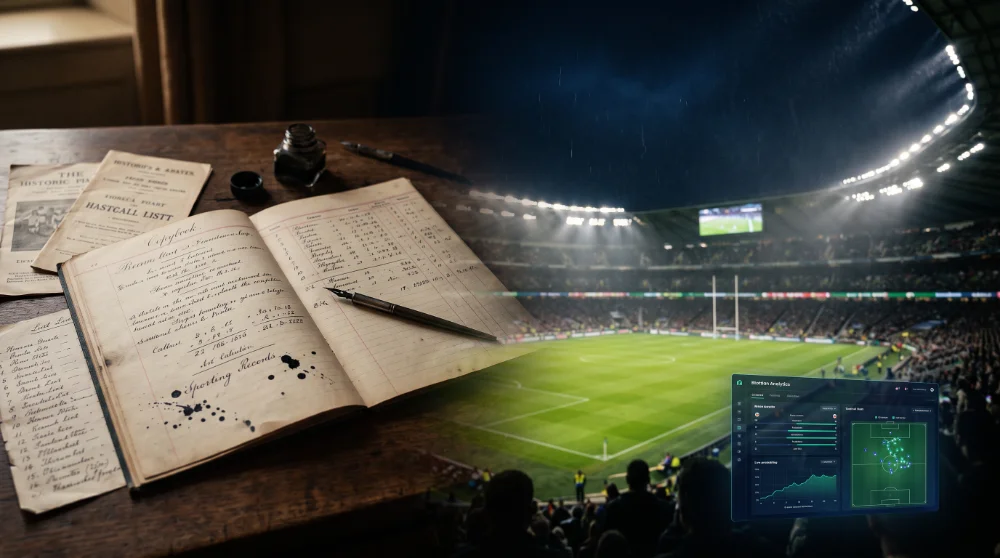
This is an observer’s study on Bernie Masterson, the poetry of Máighréad Medbh and what happens when rules meet free will.
Look no further than the MExIndex moving image archives for the seven-minute video piece Bold Writing, created in 2016.
The work is a creative partnership between visual artist Bernie Masterson and poet Máighréad Medbh. The project began with the discovery of an everyday historical object in the Mountjoy Museum’s collections. This was an old Vere Foster “Bold Writing” copybook, the kind used in Irish schools and civil service classes over a century ago to teach young people neat penmanship.
Pupils traced upright strokes, curves and moral proverbs between parallel printed lines. The goal was clear: uniform script that was clear, compliant, and standard.
Masterson and Medbh take that rigid template and break it wide open. On screen, close-ups of scraping nibs, dripping dark ink, and physical skin collide with Medbh’s spoken verses. The film asks a direct question: what happens when human instinct pushes back against a system that demands complete obedience?
Bold Writing is a must-read for anyone interested in how individuals handle systems of control. We live with rules, regulations and strict boundaries every single day. The tension is always the same, no matter what. Whether an artist breaks through a rigid format, an athlete improvises past a strict defensive structure on a pitch or an observer analyses odds and probabilities at a digital table, the tension remains the same. The real spark of life appears when a human mind makes a personal, daring call against established constraints.
Tracing the Line: The Origins of Bold Writing
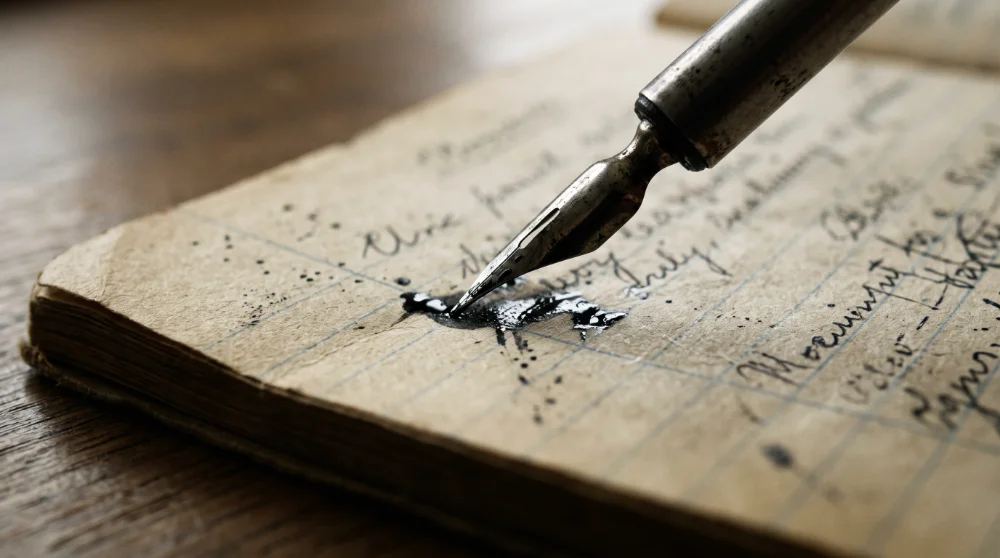
Understand what Bold Writing communicates. Look at the history behind the Vere Foster copybooks in Ireland.
Vere Foster was a nineteenth-century philanthropist who was determined to improve national education. His copybooks were an enormous commercial and pedagogical success. But their method was uncompromising:
Lines were ruled across pages with mathematical regularity.
Children dipped steel nibs into black ink and copied moral maxims until their personal handwriting disappeared into the official style.
The handwriting was called “Civil Service Script” because government desks and prison offices needed ledgers that looked uniform, impersonal and orderly.
Bernie Masterson encountered these copybooks while working within institutional walls. Having spent years facilitating art sessions inside Irish correctional facilities, she knows exactly how institutional settings attempt to reshape identity.
In Bold Writing, the copybook is no longer a harmless relic of old classrooms. It is a visual symbol for every institutional structure that tries to contain messy human emotions.
When you watch the film, you will see that the pen does not just glide politely across the page. Let me be clear: it scratches.atches on rough paper fibres, and leaves heavy blotches. Medbh’s voice cuts across the visuals with sharp, rhythmic clarity. You hear the friction between the rule book and the hand holding the pen.
Breaking the Pattern: The Human Element
Systems are very comfortable with things that they can predict. For a school curriculum, a civil service filing system or a corporate database to work well, everyone involved has to behave in the same way.
The problem is that people are complicated.
The fight of one person against the system
In Masterson and Medbh’s film, there are several visual elements that show the breakdown of mechanical order.
The Body as Surface: The camera switches between paper records and human skin. Words written on living tissue stretch, wrinkle, and bleed, refusing to stay in straight lines.
The sound design makes breathing, sighing and the sound of the nib seem louder. It reminds the viewer that people, not documents, are what matters.
Rhythmic Disruption: Medbh’s poetry does not follow the rhymes of a metronome. It speeds up, stops suddenly and uses phrasing that is not smooth to confuse the listener.
By showing human vulnerability alongside mechanical rules, the film demonstrates that true expression emerges precisely where standardisation fails.
The Playbook Versus the Pitch: How to handle the pressure in sports
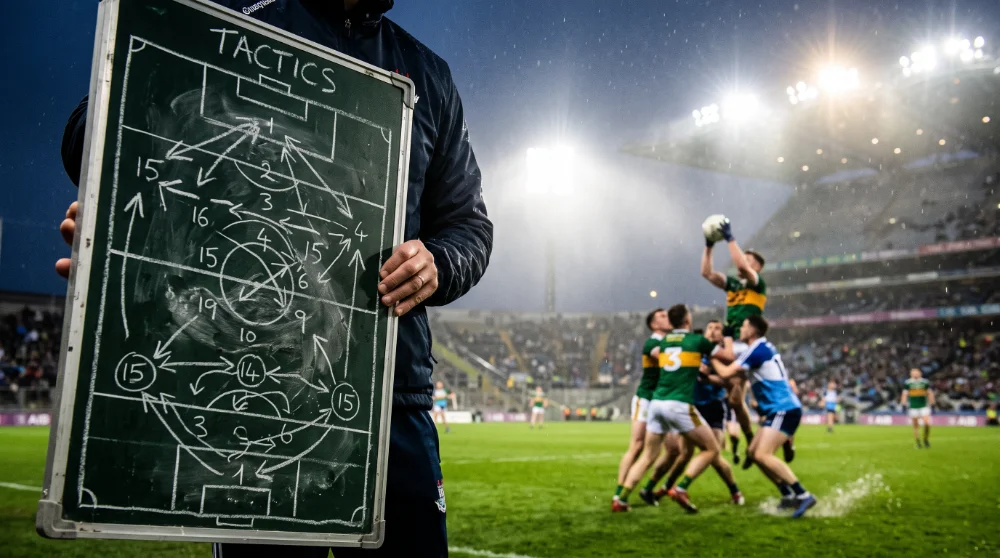
The same thing happens every weekend at Irish sports grounds, where strict instructions are given and then suddenly people start doing their own thing.
Think about how professional sports teams get ready for a competition.
Coaches spend days drawing tactical diagrams, analysing video playback, and practising set-piece patterns on training pitches.
The formations are plotted down to the metre, much like the ruled guides in a Vere Foster copybook.
Players are given strict instructions: stay in your defensive position, follow the set routes and play the ball high up the pitch.
But as every supporter watching from the stands at Lansdowne Road or Thomond Park knows, matches are rarely won by only looking at the statistics:
The Unscripted Moment: A defender quickly chooses to move out of their defensive position and stop the ball.
The Creative Spark: A Gaelic football player takes on two defenders and kicks the ball over the bar.
Chaos in the Box: In the last five minutes of a football match, the best plans go out the window and players just do their best.
The rules of the game are the foundation of a team, but it’s the players’ courage that leads to victory. The athlete who knows when to break the pattern is the one who creates the spectacle.
The chances of something happening, how likely it is, and how games are designed today

In our digital era, the balance between fixed structures and human agency has moved online, particularly in areas like sports analysis, market analysis and probability-based entertainment.
When you look at a modern sportsbook lobby or an online casino table, you see a system based on exact statistics:
The maths and personal calls have been fixed.
The Engine Room: Digital slot games and live table games use strict codes. The maths behind slot machines, like RTP figures and random number generators, is set in stone.
The Decisive Choice: Even when the rules are set, the person taking part can choose what to do. Deciding whether to bet on sixteen in blackjack, backing an underdog with a two-goal handicap, or timing a cash-out during a live football match all involve making personal choices.
Reading the Shifting Board: When you bet on a live sporting event, the odds change all the time based on how the game is going. If you watch a team’s confidence grow, you can spot value long before an algorithm adjusts its price.
The mix of fixed systems and personal intuition is what makes it exciting. You are testing how well you understand a situation by looking at the cold, logical numbers.
So, what makes a digital platform trustworthy?
Just as artists in Bold Writing demand honesty of materials – showing real ink, real paper, and real voices – users exploring digital entertainment today value clear, unvarnished standards.
When it comes to picking a platform for weekend fixtures or the odd online card game, there are a few clear signs that it’s up to scratch:
Here are some of the main things to look out for when checking if a platform is any good:
Clear Rules and Figures: A top-tier provider will state RTP percentages, bonus terms and payout limits in plain language without burying details in fine print.
High-Speed Execution: When there’s a live sports event on, the odds can change pretty quickly. A reliable server processes bet confirmations straight away, making sure that users get the exact price they see on screen.
Here are some professional live streams for you: If you’re using a platform with live dealer lobbies, you’ll need to make sure you’ve got clear, high-definition camera feeds with real audio. This way, players can track cards and wheels with complete confidence.
You’ll get your cash out in no time. If an account shows winnings, a decent platform will process withdrawals quickly and without any unnecessary red tape.
A clean, honest setup gives users the freedom to enjoy their pastime with confidence.

Keeping Your Discipline: The Value of Measured Play
The main idea of Bold Writing is to combine discipline with freedom. When it comes to recreational betting and digital gaming, discipline isn’t something you should see as an obstacle. In fact, it’s the most valuable tool you’ve got.
To keep sports analysis and gaming enjoyable, adopt the steady mindset of a craftsman:
- Just make sure you keep a set amount of money aside for entertainment.
Decide on a sensible sum of money set aside strictly for leisure. Just stick to a small amount of money for each pick – no more than 2% of the total. This means that if you get one unexpected result, it won’t throw your whole position off.
- It’s all about the value, not the feelings.
It’s easy to get caught up in supporting a favourite county team or an iconic club. But if you look at the numbers, like form, weather, injury reports and line discrepancies, you’ll be much better off.
- Just accept the variation, yeah?
Even the best plan or the best research can still go wrong – a late deflection, a mistake by the referee, or just being unlucky with the cards. A disciplined player accepts these bounces as just part and parcel of the game and never chases losses out of frustration.
4. Know when it’s time to stop writing.
It’s like when an artist takes a step back from their masterpiece – the best time to close an app is when your session ends or the final whistle blows. Taking a step back will help you enjoy it more next time.
The lasting impact of brave writing
Bernie Masterson and Máighréad Medbh’s Bold Writing is still a really interesting entry in the MExIndex archive because it touches on something fundamental about human character.
We build institutions, draw lines, and set up mathematical frameworks to create order out of uncertainty. But we’re still most fascinated by the moments when someone dares to think outside the box.
Whether it’s an artist making a bold stroke with fresh ink on blank paper, a playmaker breaking open a tight match on a Saturday afternoon, or an observer backing an intuitive call against the odds, we’ll always celebrate the courage to think for ourselves.