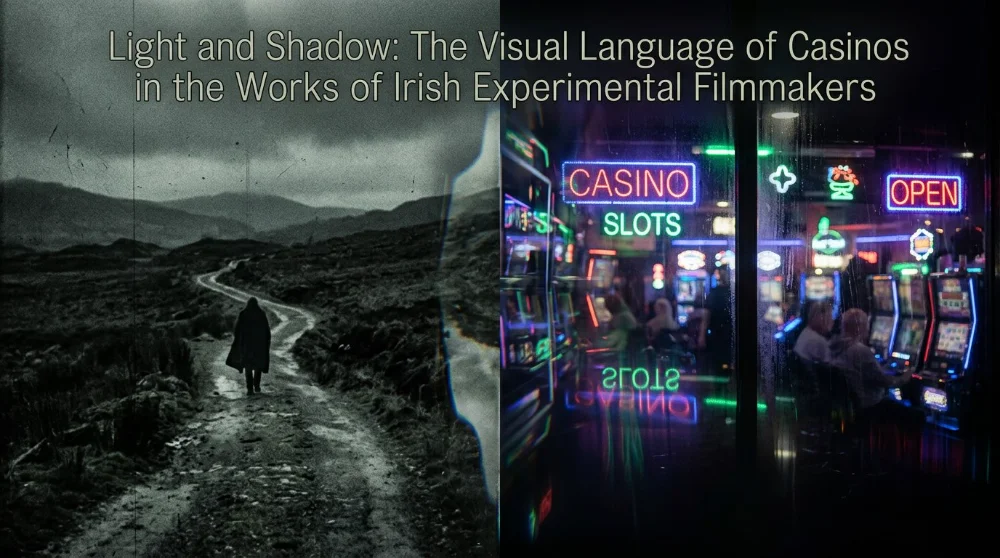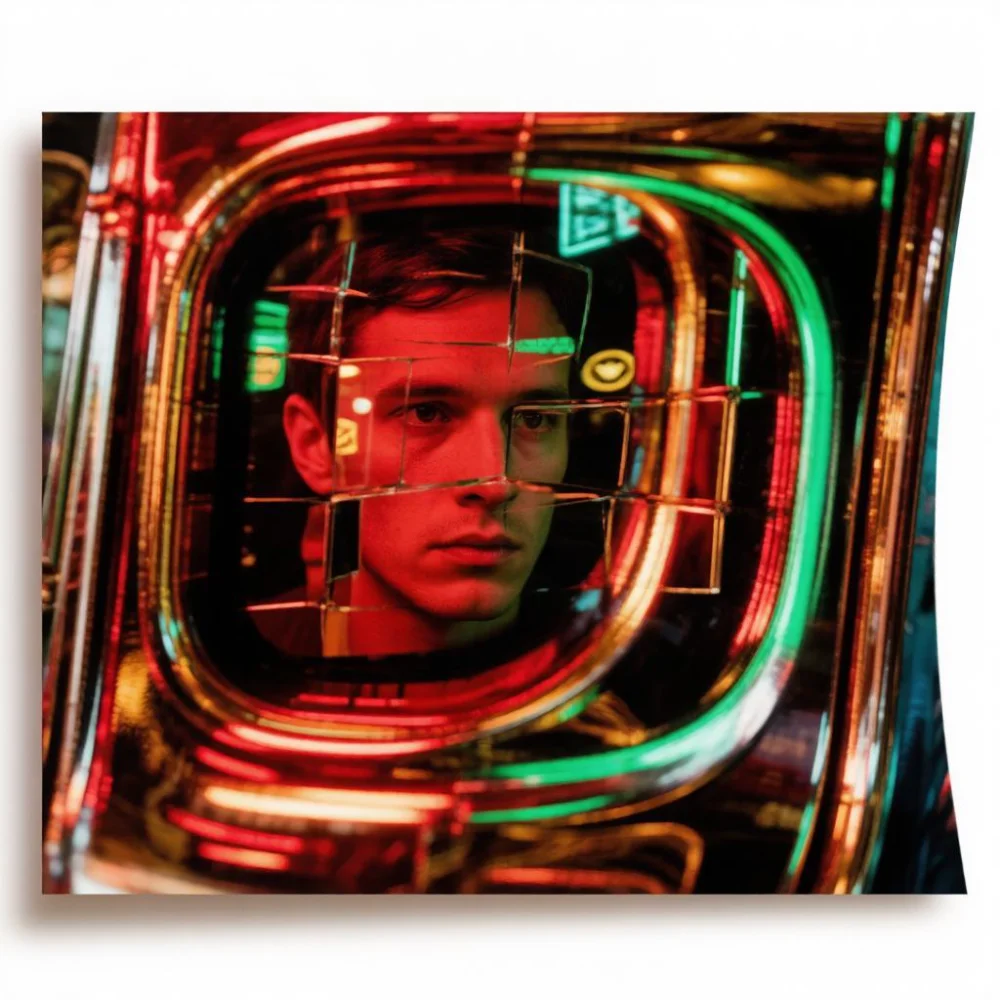
Chance and Obsession: The Gambler’s Image in Irish Cinema
I. The Betting Man’s Inheritance
There is a peculiar strain in the Irish character that finds its most vivid expression in the act of wagering. It is not merely a pastime, but a cultural inheritance—a willingness to stake everything on the turn of a card, the flicker of a greyhound, the spin of a wheel. This impulse has found its way into the heart of our cinema, most notably in two films that, though separated by genre and tone, share a common preoccupation with the gambler’s plight. In 2004, Irish audiences were offered two distinct visions of the gambling life. There was Man About Dog, a raucous comedy of desperation, and The Halo Effect, a bleakly comic study of a soul worn thin by the odds .
Both films, in their different ways, explore a distinctly Irish relationship with risk, one that moves between the absurd and the tragic with a weariness that feels authentic. To consider these works alongside the holdings of the Irish Artists’ Film Index is to trace a line from the popular to the experimental, seeing how the themes of chance, luck, and obsession have been refracted through the lens of Irish filmmakers for decades .
II. The Comedy of Ruin: Man About Dog
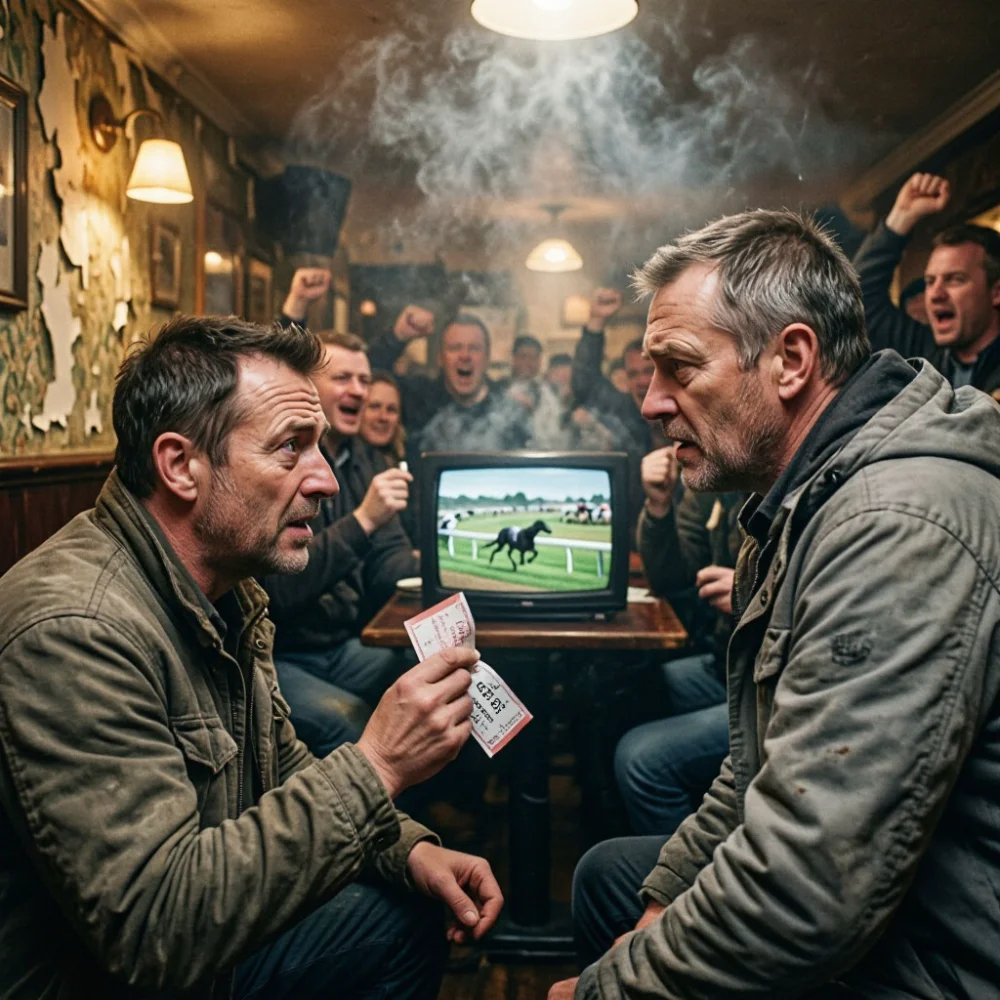
Man About Dog offers a familiar template: the Irish comedy of misadventure. The plot is propelled by a gambling debt of £50,000, owed by Mo Chara to a Belfast bookmaker . This is not a debt born of vice, but of misplaced faith in a dog—a creature, as any gambler knows, is never a sure thing. The film follows Mo Chara and his two hapless friends, Paulsy and Scud, as they flee south, embarking on a picaresque journey in pursuit of a greyhound with an unerring talent for winning .
The film understands gambling not as a grand passion but as a form of lower-middle-class desperation. It is a form of madness, but a democratic one, shared by all who stand in the betting shop. One reviewer noted that to truly appreciate the film, one must have “some interest in gambling in general, and gambling on dogs in particular” . The characters are not sophisticated high-rollers; they are “wide-boys on the make” whose ambitions are as modest as their incomes are meagre . Their gamble is not for power or glory, but simply to stay afloat, to pay off a debt that, to them, represents an insurmountable mountain of trouble.
III. The Tragedy of the Ordinary: The Halo Effect
If Man About Dog treats gambling as a source of farce, The Halo Effect sees it as a slow, grinding form of suicide. This is a “humane, realist drama” from Lance Daly, set in a grubby Dublin chipper that becomes a stage for a series of small, existential tragedies . The film’s protagonist, Fatso, played with profound weariness by Stephen Rea, is not a man who will ever win big, nor one who enjoys the thrill of the chase. He is simply a man who has lost everything—his wife, his child, his dignity—to a compulsion he can no longer control .
The film is described as a “comic tale of gambling induced financial desperation,” and the comedy is of the blackest variety . Fatso works around the clock to service old debts, with a “different loan shark on his back every day” . His chipper becomes a refuge for the similarly broken—a “band of layabouts and down-and-outs” . The film culminates in a gesture of bleak absurdity: Fatso, having lost everything, gambles his life’s earnings, including the chipper itself, on a game of snap with a child . It is a moment that encapsulates the film’s view of addiction as a cycle of humiliation and self-destruction. The film’s message, as one critic put it, is that “life is one big gamble… It’s all about the cards that you’re dealt” .
IV. The Experimental Undercurrent
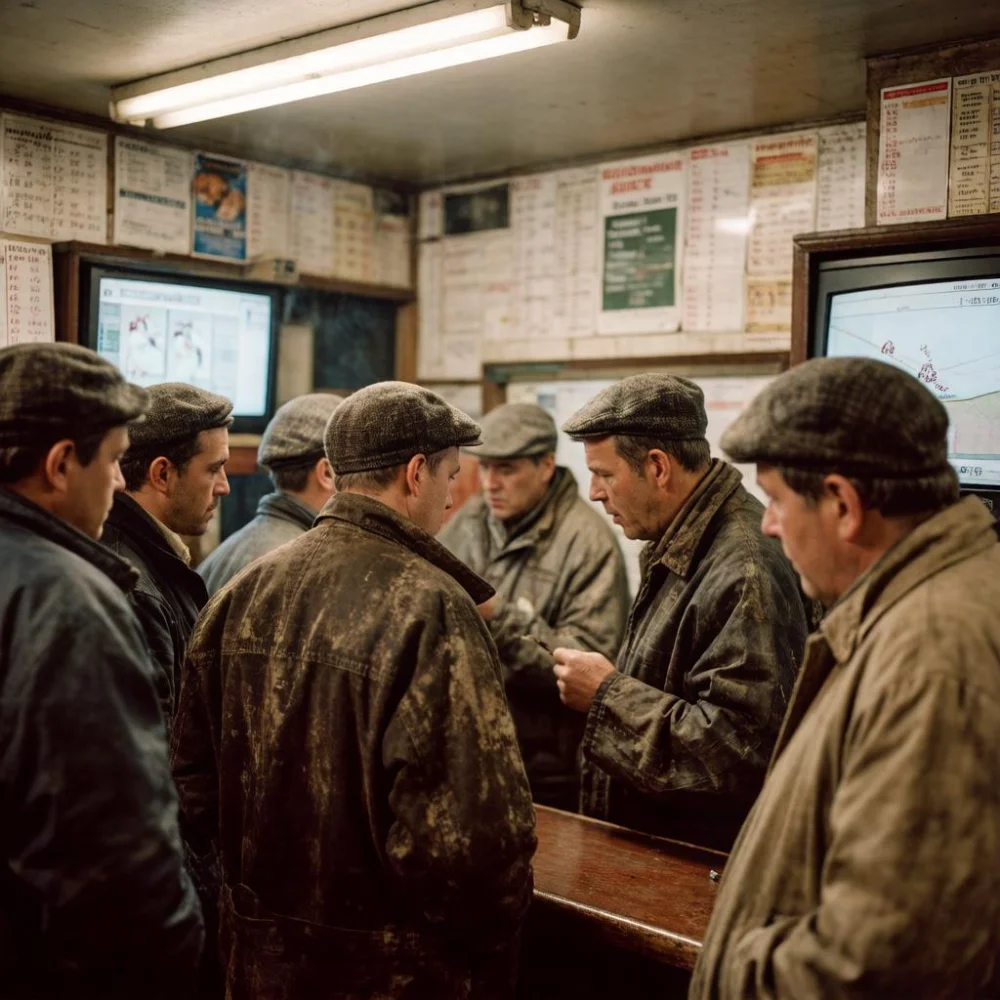
While these two films brought the gambler to the popular screen, a parallel conversation was unfolding in the world of Irish experimental moving image. The Irish Artists’ Film Index, a resource dedicated to “visual arts-based moving image works by Irish artists,” is a testament to the formal and thematic innovation that exists beyond the commercial mainstream . Though the database does not currently feature a curated selection on the theme of gambling, its very existence points to a tradition of Irish filmmaking that is attuned to the abstract, the psychological, and the socially critical .
One might imagine how the themes of chance, luck, and obsession could be explored in this context. Consider the Index’s stated focus on works that address “Irish history, politics, culture and society” . A filmmaker working in the experimental tradition might approach the gambler not as a character, but as a symbol of a society predicated on risk—the risk of emigration, the risk of economic collapse, the risk of a nation always living beyond its means. The cinema of the real, as explored by artists like Holly Márie Parnell, uses the personal to unpack the systemic, a method perfectly suited to interrogating the cultural inheritance of the gambling impulse.
V. A Recurring Figure
The figure of the gambler persists across the landscape of Irish art. It is a figure born of a culture that is both deeply superstitious and intimately acquainted with the mechanics of chance. Man About Dog and The Halo Effect represent two poles of this representation: one comic, one tragic, yet both deeply connected to a specific, working-class Irish experience. These are stories not of high-stakes glamour, but of the quiet desperation of the betting shop and the loan shark’s knock.
The Irish Artists’ Film Index stands as a reminder that these themes have been, and continue to be, explored in more formally adventurous ways . The gambler, in all his ruin and folly, is a recurring figure in our cinematic imagination because he speaks to something fundamental in our collective psyche—a willingness to roll the dice, to trust in luck, and to pay the price when the odds finally catch up.