Behind the Scenes of the IFI Irish Film Archive: Treasures of Irish Experimental Cinema
I. A National Treasure, Tucked Away
Walking through the cobbled streets of Temple Bar, one is surrounded by the vibrant hum of Dublin’s cultural quarter. It is easy to forget that, nestled within the Irish Film Institute, lies a repository of our nation’s soul that is as significant as any in the country. The IFI Irish Film Archive, as Head Kasandra O’Connell has noted, is a place of work that is “exhilarating and frustrating in equal measure,” a labour of love driven by a small but dedicated team whose resources seldom match the scale of their remit .
It is a quiet giant in our cultural landscape. Since its establishment in 1986, the Archive has grown to become the world’s largest and most comprehensive collection of Irish moving image material, spanning the years from 1897 to the present day . This is not merely a vault of forgotten films; it is a meticulously curated body of work that includes animation, documentaries, newsreels, feature films, and the very subject of our inquiry: experimental cinema. For those of us who have long championed the visual arts in this country, the Archive is an institution of profound importance.
II. The Amateur Lens: Ireland’s Unintended Avant-Garde
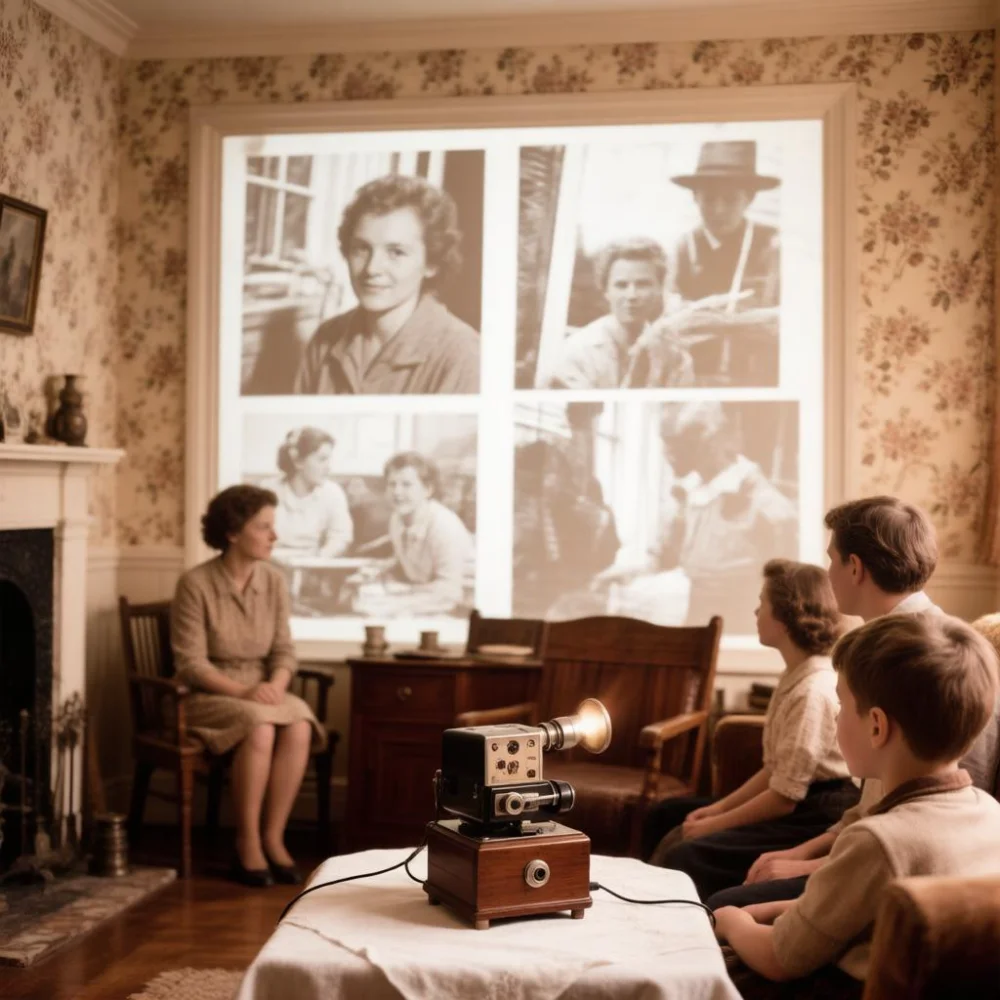
One might wonder why a national archive holds so much amateur film. The answer is woven into the fabric of our history. As Kasandra O’Connell has pointed out, Ireland was late to develop a national film industry—the Irish Film Board (now Screen Ireland) was only established in 1980, and our national television station, RTÉ, began broadcasting in 1961 . This means that, for a significant portion of the 20th century, the representation of Ireland on film was largely the work of amateur filmmakers.
This is where the experimental impulse finds a home. The Archive collects amateur material because it is often our most authentic and unvarnished visual record. It captures the quirks of daily life, the nuances of community, and the vernacular of a nation not yet fully scripted. These films, made for reasons of personal memory rather than public consumption, often possess an experimental quality by their very nature. They are unburdened by commercial convention, offering a raw, uninhibited view of Irish life that is impossible to find elsewhere. While Irish Destiny (1926), The Quiet Man (1952), and Mise Éire (1959) stand as pillars of professional filmmaking, it is in these unexpected reels that the true spirit of a self-documenting nation resides .
III. More Than Just Footage: A Comprehensive Collection
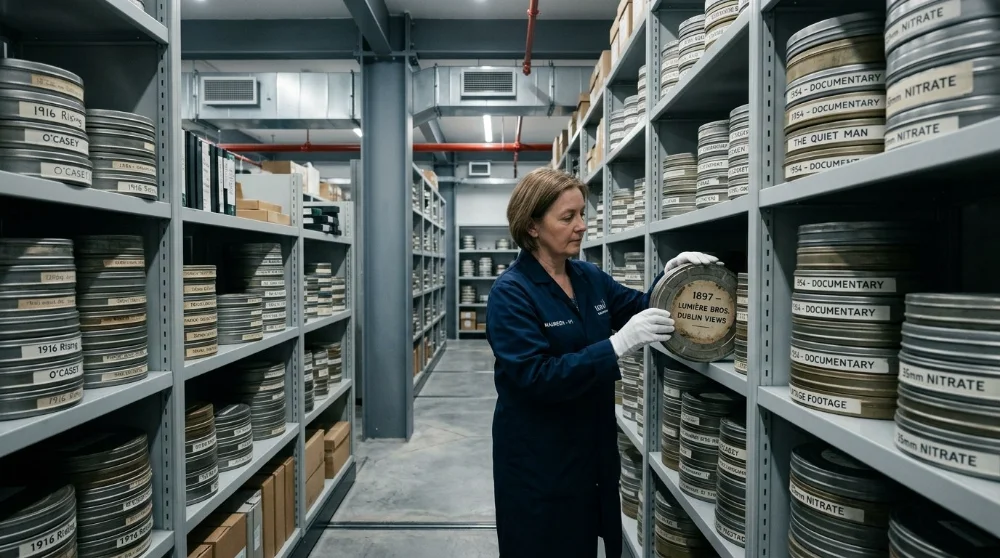
The Archive’s holdings are vast. It preserves over 30,000 cans of film and 15,000 tapes, alongside the invaluable Tiernan MacBride reference library and a collection of over 30,000 stills, posters, and documents . Its scope is all-encompassing: fiction, features, public information films, documentaries, newsreels, animation, and experimental film.
Key collections from directors such as John Boorman and Neil Jordan are held within its climate-controlled vaults in Temple Bar, with a second, larger facility at Maynooth University that tripled the Archive’s capacity when it opened in 2018 . While experimental may not headline its categories, it is the connective tissue that runs through much of its most interesting work. The Archive actively acquires amateur material that falls within its acquisition policy, often from individuals and families, ensuring that the true breadth of Irish moving image culture is preserved for posterity .
IV. A Window to the World: The IFI Archive Player
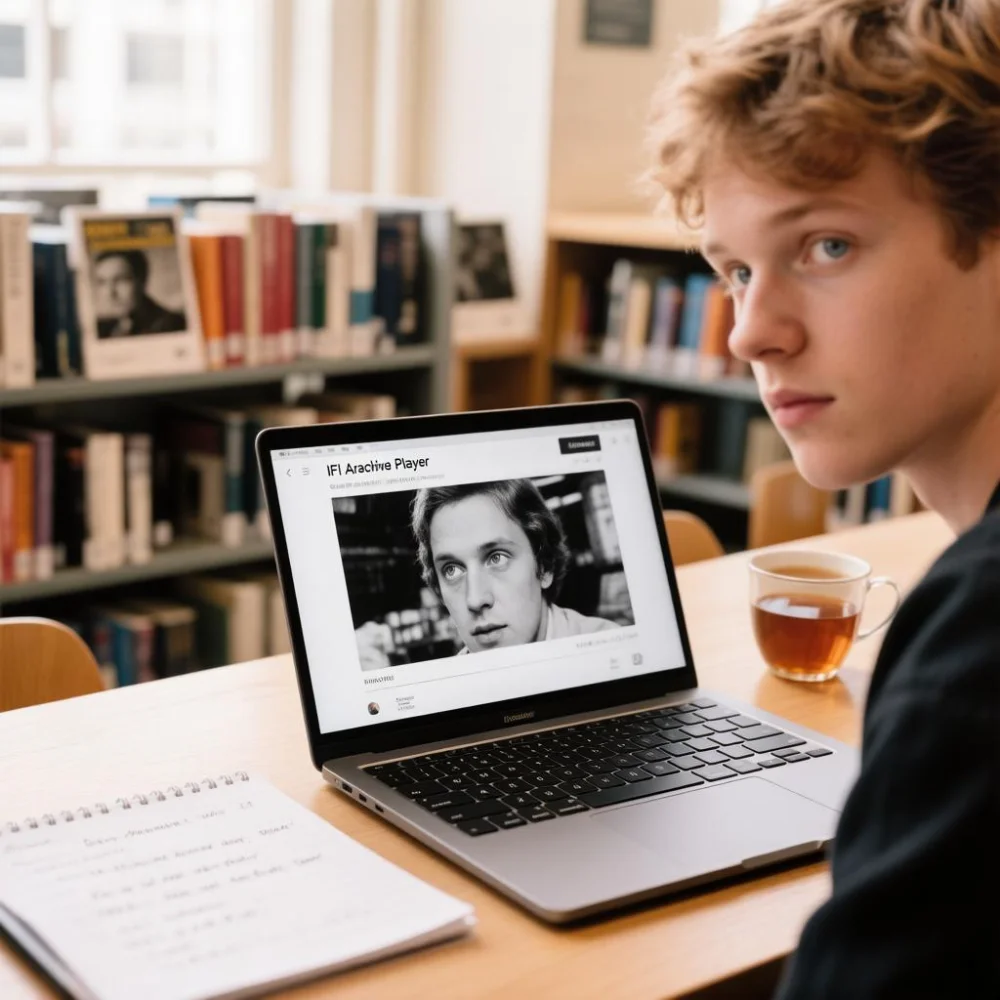
The Archive is not a closed book. In a vital move for accessibility, the IFI launched the IFI Archive Player in 2016. This online platform is free to view and is not geo-blocked, allowing anyone in the world to delve into a century of Irish film production . It is here that the treasures of the archive are brought to light.
For our readers, this digital repository is a portal to the kind of work that defines the Irish Arts Review’s interests: the visual, the creative, and the culturally defining. It allows us to examine the work of pioneering Irish artists, to see familiar landscapes through a new lens, and to understand the artistic sensibilities that have shaped our nation. The material is used regularly by academics, students, filmmakers, and researchers, proving its value as a living resource . It is a testament to the Archive’s commitment to sharing the work they so diligently preserve.
V. Bridging Past and Future
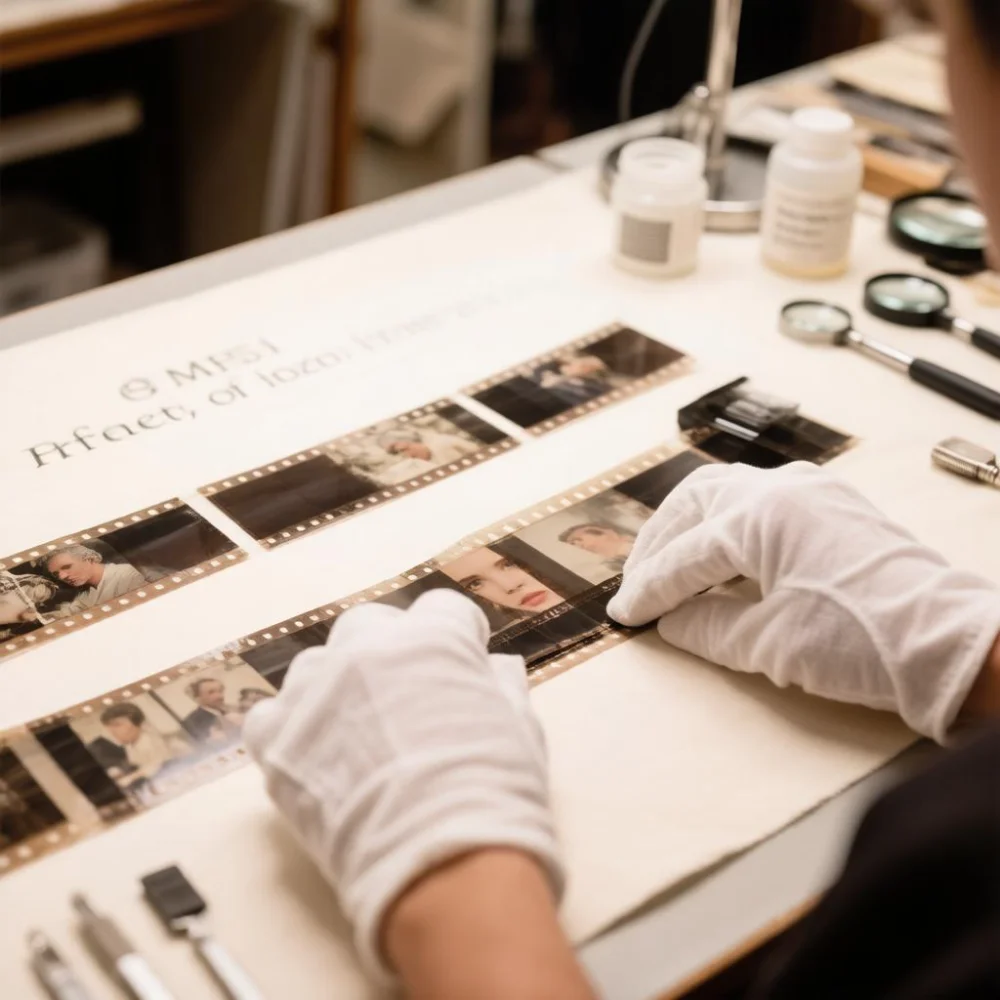
The work of the IFI Archive is a crucial act of cultural stewardship. To borrow from their own philosophy, preserving our film heritage is essential for ensuring that future generations can understand the Irish experience. But it is also a creative act. When the Archive restores a classic like Irish Destiny or showcases the experimental works of a new generation, it is not merely preserving the past; it is actively shaping the present and inspiring the future of Irish moving image culture.
This is work that deserves not just our attention, but our unwavering support. It ensures that the stories, images, and artistic visions of our nation will continue to speak to us for years to come.