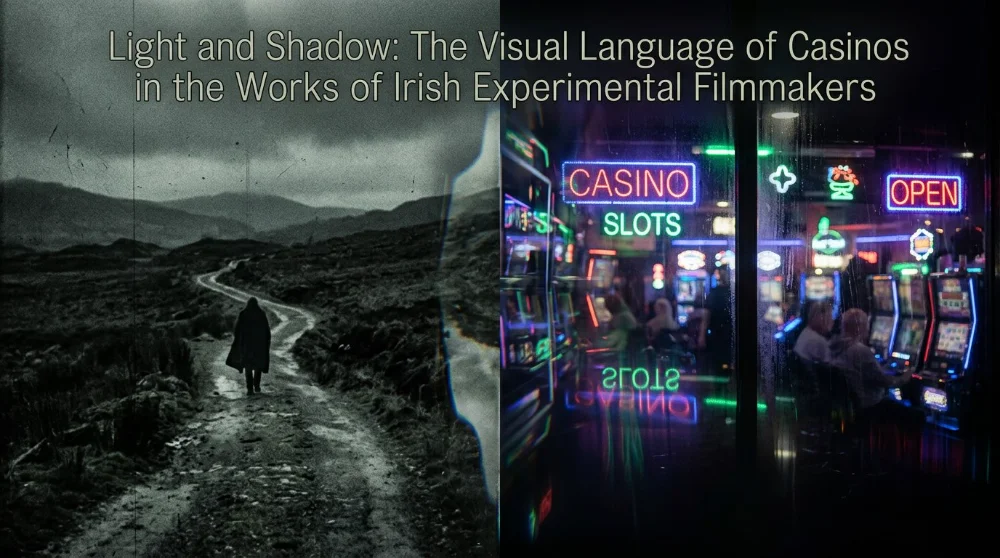
Light and Shadow: The Visual Language of Casinos in the Works of Irish Experimental Filmmakers
The glittering, disorienting world of the casino has long fascinated filmmakers. It is a realm of heightened reality, where neon lights cut through darkness and every surface reflects a distorted image of desire and loss. While big-budget films often depict this world as one of glamour and danger, Irish experimental filmmakers have explored the visual and psychological language of such spaces in more profound ways. Through grainy 16mm film, hand-processed images, and layered narratives, filmmakers like Michael Higgins and Kevin Gaffney create visions that resonate with the experience of stepping into a world of mirrors, risk, and flickering images.
The Irish Artists’ Film Index, a vital resource for discovering works by Irish and Ireland-based artists, provides a window into this fascinating body of work . The MExIndex, as it is known, is a searchable online database that offers free access to key information on experimental moving image works by Irish artists, exploring themes relating to Irish history, politics, culture and society . Through its curated selections and external collections, it highlights the work of artists who push the boundaries of cinematic form . Examining the work of key artists featured in the Index reveals a rich visual language that can be understood as a powerful engagement with the aesthetics and psychology of the casino.
The Spectral Casino of Michael Higgins
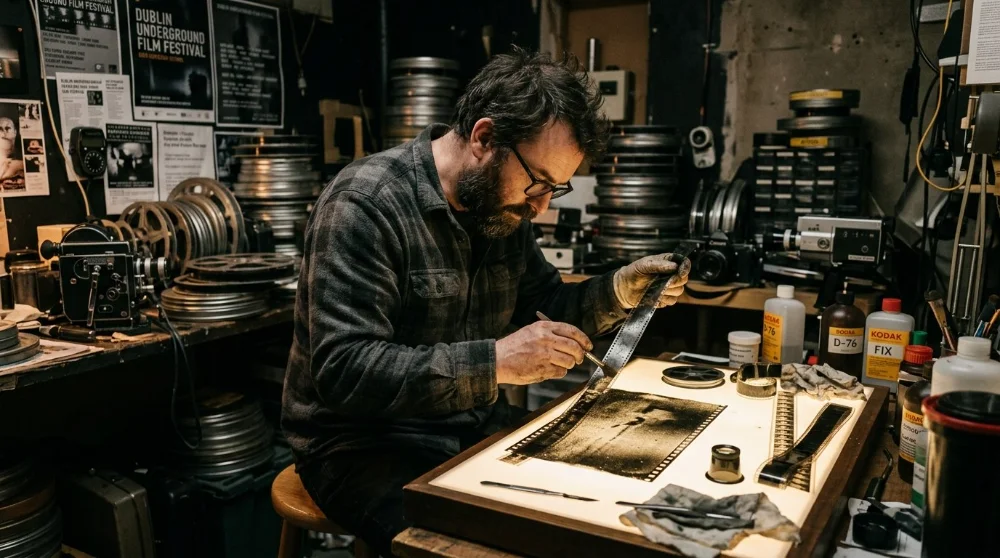
Michael Higgins, an Irish underground filmmaker, creates work that feels like it has emerged from a dream or a half-remembered memory of a silent film. His notable work, At One Fell Swoop (2015), is described as the closest thing to a “ghost film”—not a film about ghosts, but a film that is a ghost . This spectral quality is achieved through a deliberate and demanding process: the film was shot using a 50-year-old wind-up camera on expired 16mm black-and-white film, which Higgins hand-processed himself .
While At One Fell Swoop is set in the rural Irish landscape, following a stone carver on his “metamorphic wander,” its visual language is profoundly connected to the experience of a casino floor . The film presents a “flickering, shifting world of shadows” and is photographed anamorphically, creating a wide, scope-like image that can feel both immersive and trapping . This is the aesthetic of a space where reality is unstable, where one can feel “trapped in a flickering, shifting world of shadows” . The protagonist, a seemingly lonely and disoriented soul, is “trapped in the cold, mercurial limbo beyond the looking glass” . The mirrors and distorted reflections of a casino create a similar sense of a fractured self, a soul trapped in a hall of mirrors.
The film’s use of expired film, hand-processing, and anamorphic lenses creates a unique, “patinated” look that appears “ahead-of-its-time” yet ancient, like a relic from the silent era . The colours are muted, the shadows deep, the contrast stark. This is the visual language of a space of high risk: decaying, haunted by what has been lost, and simultaneously beautiful and melancholic. The audience is “submerged in an elliptical (non)narrative about searching for the Essence” . The same could be said of the gambler searching for the ultimate win, for a moment of transcendence, in the immersive and disorienting world of the casino.
The Disintegrating Self in Kevin Gaffney’s Everything Disappears
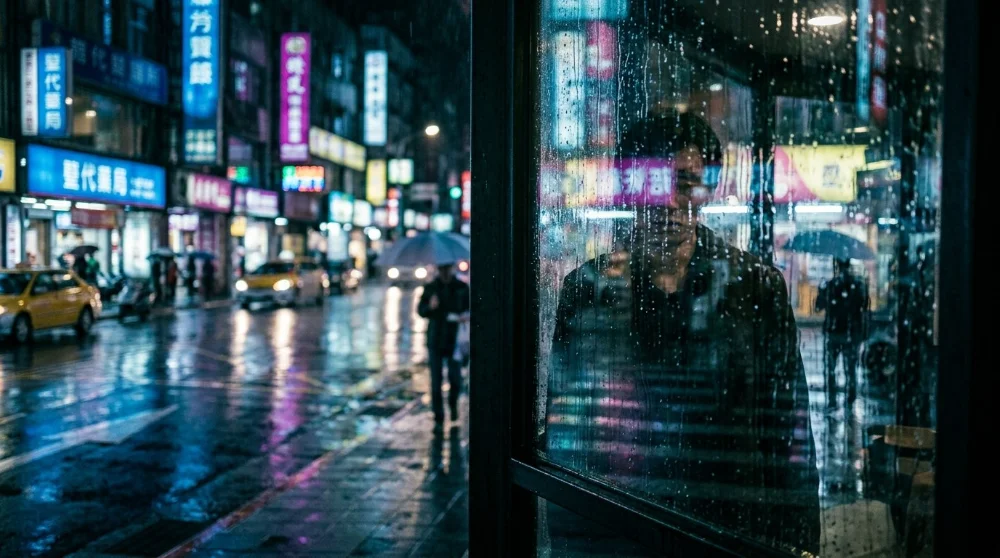
Kevin Gaffney’s Everything Disappears (2014) explores the casino’s central theme of performance and identity. The film revolves around four participants from Taiwan who answered a call to explore “ideas of self-image, performance and identity” . The work unfolds across Taiwanese cityscapes and intimate portraits, “mediating an exchange between reality, reconstruction and mythological imagination” . While not set in a casino, its structure mirrors the experience of an immersive gaming space.
The film is divided into seven chapters: (i) Everything Disappears, (ii) I Grip Tightly to the Sand, (iii) An Exercise in Forgetting, (iv) The Elephant on the Roof, (v) They are Known by Many Names, (vi) The Ghost Ship, and (vii) The Closed Eyes of a Stranger . This fractured narrative creates a sense of disorientation, where the “portrayals of the four participants unravel across intimate scenes to surreal staged events” . A casino functions in a similar manner, with its multiple rooms, games, and perpetual present, where one can lose track of time and self.
The central chapter, The Elephant on the Roof, tells the story of a young gay man who performs mental illness to escape military conscription, only to lose his grip on reality . This “performance” is a crucial metaphor for the casino experience. In the casino, individuals perform roles—the high roller, the lucky gambler, the cool professional—in a space where the boundaries between the performed and the real can blur dangerously. The casino itself is a “surreal staged event” where everything—the architecture, the lighting, the staff—is a constructed reality designed to create a world of illusion where the self becomes a mutable role.
Gaffney’s use of Taiwanese cityscapes and intimate portraits creates a sense of dislocation and the feeling of being in a “world-city” . The casino is the ultimate globalized space, a non-place where cultural and geographic markers are erased in favour of an immersive, all-encompassing environment of play. The title, Everything Disappears, is a stark reminder of the casino’s fundamental lesson: money, time, identity, and reality can all disappear in the flicker of a neon light.
A Visual Vocabulary of Risk
Both Higgins and Gaffney explore a visual vocabulary of risk that is deeply embedded in the Irish cultural and economic context. The instability in their films—the flickering shadows, the hand-processed decay, the deteriorating grasp on reality—resonates with a history of economic uncertainty. Ireland, a country with a strong and sometimes problematic relationship with gambling, has a cultural memory of boom and bust that can be projected onto these cinematic spaces.
The casino, as depicted in the language of Irish experimental cinema, is not just a place of fortune but a mirror of a broader condition. It is a site where the self is performed and can be lost, where reality is unstable, and where the promise of luck can be a dangerous delusion. The work of artists like Michael Higgins and Kevin Gaffney offers a powerful visual engagement with these themes, portraying the casino not through the lens of glamour, but as a haunted, disorienting, and ultimately fragile dreamscape. Through the Irish Artists’ Film Index, these works are being preserved and shared, offering a unique and critical perspective on the visual language of risk.